


"Stability supports routine, and routine is the lifeblood of the American classroom."
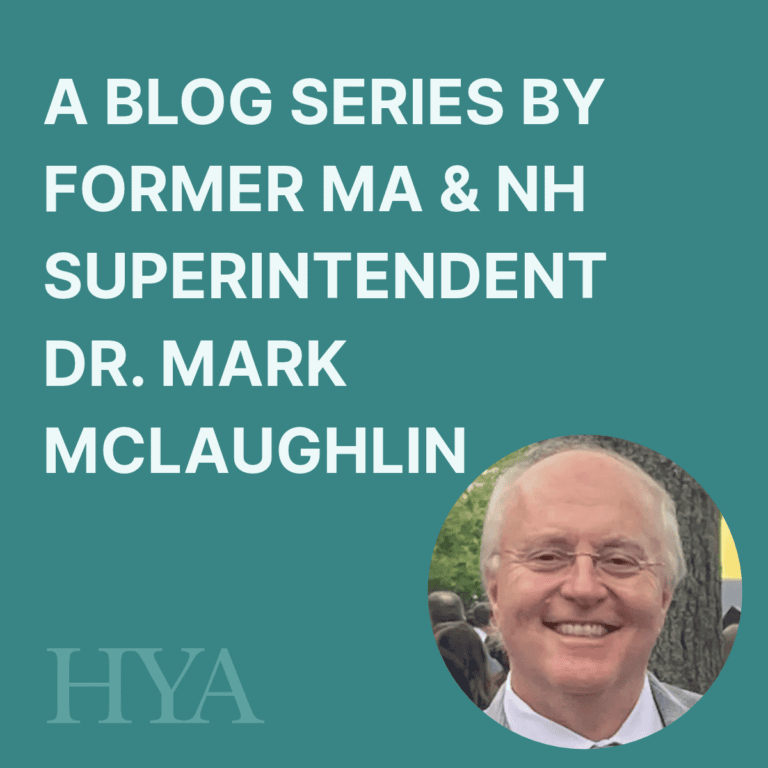
By Dr. Mark McLaughlin
The public-school superintendency has never been an easy job. The high-profile role requires a continuous balancing act among often competing forces: teachers’ unions, elected school boards, taxpayer groups, parents, state and federal rules and mandates, and tightening budgets. But in the post-COVID era, the challenges have magnified, fueled by the polarization of thought, opinion and belief that seems only to have grown in the years since we put away our masks. In that environment, an already tough job has become even more difficult to manage, and harder to keep. Pre-pandemic, the average superintendent turnover rate hovered around 14%. By the 2023-24 school year, that number jumped to nearly 25%; while some stability seems to be returning in superintendent tenures, a new and higher turnover baseline has been established and is likely to remain.
The cost of this instability in the ranks of school district leaders is hard to quantify, but let’s look at what’s obvious. Stability supports routine, and routine is the lifeblood of the American classroom. Change at the top often leads to initiative changes in the classroom, sometimes very quickly. The need to show impact, produce change, demonstrate currency, and prove influence can lead some new superintendents to create storms of change that cover up inherent systemic flaws that remain when the storm has passed. Often, as in the wake of a storm, what’s left is a mess, worry about the next storm, and patchwork attempts to fix what was damaged. But deep and careful analysis of the structural deficiencies and other factors that made the storm damage worse, and which likely contributed to the leadership instability in the first place, is too often incautiously and incompletely undertaken–setting the stage for the next all too predictable storm.
The literature and research on school district leadership are supposed to help superintendents, both new and veteran, to navigate these complicated waters. In the midst of challenge, we look for help wherever we can find it. But where, exactly, should a district leader look? In my experience, leadership literature, especially regarding the superintendency, is often generic and almost always theoretical: ten-step plans to manage a crisis, three considerations for dealing with a difficult board, top five components of a successful entry plan, and so on. Moreover, what these resources too often lack is the perspective that comes not from theory but from practice, from those who’ve actually done the work. For a complex role like the superintendency, in a complex time like now, aspiring, new, and veteran school district leaders need exposure to the real stories of life inside the role from those who’ve been there, the accumulation of which will reveal realities the academic literature can never match and considerations the academic research can only begin to contemplate.
Over the coming months, I’ll share real experiences from my time as a superintendent, the decisions I made, the challenges I faced, and the lessons I learned along the way. My hope is that these firsthand accounts will offer practical insight to current and aspiring superintendents, helping them navigate the complexities of the role, make informed decisions, build the foundation for lasting leadership, and remember that they are not alone in this role.
When Doing the Right Thing Gets Complicated: What Would You Do?
Change is hard. We know it, we talk about it, and we spend considerable time and money learning how to manage it. Yet when change moves from theory to practice, especially in public education, things can get complicated quickly. Good intentions, careful planning, research, and a commitment to doing what is best for students do not always guarantee a smooth path forward.
Sometimes, the real test of leadership begins when someone strongly disagrees with a change you believe is necessary.
So, let me ask you a question: What would you do when a decision intended to improve learning becomes a personal, political, and even legal battle?
A Simple Question With Big Consequences
My experience began with a seemingly straightforward question about homework: What do we grade, why do we grade it, and what is it worth?
As assistant superintendent for curriculum and instruction in a New England school district, I was working with teachers and department heads to develop a new grade-reporting system. During one discussion, I noticed that homework grades were often justified with explanations such as, “It won’t get done otherwise” and “It teaches responsibility.”
Homework could count for 10 to 30 percent of a student’s grade, even when completing the assignment did not necessarily demonstrate understanding. A student could earn credit for completed work that was inaccurate, while another student who understood the material but failed to complete the homework could receive a lower grade. We also knew that homework often created tension at home, added to teachers’ workloads, and sometimes reflected the efforts of parents rather than students. And not every student had the same support, resources, or opportunities outside school.
I began to wonder: If homework is intended to help students practice and learn, should that practice carry the same weight as an assessment of what they actually know?
Most of the educators involved recognized the problem. Many agreed that homework grades could distort a student’s actual performance. But when I asked whether we should remove homework from recorded grades, the reaction was almost universal: Don’t do it. Why? Because changing a familiar practice—even one we struggle to defend—can feel like stepping onto a third rail. Still, we decided to propose a change.
The goal was not to eliminate homework or diminish its value. It was to treat homework as an opportunity to practice and develop understanding rather than as a measure of demonstrated mastery. We researched the issue, discussed the proposal, and shared our rationale. The school board approved the revised reporting system, and many parents welcomed the possibility of less conflict at home and more meaningful learning.
But not everyone saw the change that way.
When Disagreement Becomes Something More
One parent, whom I’ll call Tom, contacted me immediately after the change was announced. He demanded that we reverse the decision because homework grades had helped raise his daughter’s average and improve her chances of getting into college.
I explained our concerns. Homework grades could misrepresent student understanding, I told him, particularly when work was completed inaccurately or with substantial parental assistance.
His response was simple: “I don’t care.”
As our conversation continued, Tom admitted that he often completed his daughter’s homework himself. He saw this as his right as a parent and wanted to preserve the advantage it gave her.
For me, the issue had become about more than homework. What about students whose parents could not help them? What about families who lacked the time, resources, or knowledge to do the work? And what about students who completed assignments independently while others received substantial assistance? Should a grading system reward these differences rather than measure what students have learned?
Tom disagreed with our decision, and disagreement is part of public education. Parents should be able to question school leaders, challenge decisions, and expect thoughtful answers. But what happens when someone is unwilling to consider the rationale, the evidence, or the interests of students beyond their own? Tom took his objections to the school board, the media, and ultimately the courts. His efforts included a state appeal, public criticism, and multiple legal challenges. The initial lawsuit was dismissed, but the legal process continued. Nearly three years and $30,000 in legal fees later, the state’s supreme court declined to review his petition. We had spent years defending a change that began with a basic question about whether grades accurately reflected student learning.
The financial costs were real. So were the less visible costs: time taken from teaching and learning, anxiety among teachers, pressure on administrators and school board members, and a growing reluctance to consider other changes that might attract similar opposition.
Eventually, I had to confront an uncomfortable question of my own: Had the effort to improve student outcomes become so consumed by defending the change that we were losing sight of the work itself?
What Does Leading Change Really Require?
There are familiar recommendations for leading change: explain the reasons, involve stakeholders, provide professional development, start small, and focus on outcomes.
We did many of these things. We had a clear rationale, consulted educators, developed implementation strategies, and kept student learning at the center of our work.
But experience taught me that following the usual playbook is not always enough.
Looking back, I recognize that involving parents earlier in the process might have helped. Although teachers were essential partners in redesigning the grading system, parents had a legitimate interest in understanding the change and its implications. My decision to begin with educators alone may have contributed to the perception that families were being excluded.
That is an important lesson: You can believe in the value of a change and still make mistakes in how you introduce it.
At the same time, involving stakeholders does not mean every individual must agree before a necessary decision can move forward. People bring different experiences, priorities, and interests to the table. Some concerns reflect the common good; others reflect a desire to preserve a personal advantage.
Leaders must listen carefully without losing sight of their professional responsibilities.
There is also a difference between respecting someone’s right to an opinion and treating every opinion as equally informed. In education, professional expertise, research, experience, and evidence matter. The loudest voice should not automatically outweigh the best-supported argument.
Yet how do we maintain that principle when the loudest voice can consume enormous amounts of time, money, and attention? And how do we protect the freedom to improve schools when the possibility of conflict makes standing still seem like the safer choice?
These are not easy questions. I continue to believe that our responsibility was to improve student outcomes. I also recognize that a good goal does not excuse every misstep in the process.
The challenge is to remain open to legitimate criticism without allowing fear of criticism to prevent responsible action.
Now It's Your Turn: What Would You Do?
Imagine that you are leading a school district. You have identified a grading practice that appears unfair and does not accurately measure student learning. Teachers support reconsidering it, the rationale is sound, and the proposed change is designed to help students.
Then one influential parent launches a campaign to reverse the decision. Meetings, public criticism, and legal challenges begin consuming resources that should be devoted to students. Teachers become anxious. Board members begin questioning the initiative. Other leaders quietly wonder whether the change is worth the trouble.
You still believe the change is right, but the personal and professional costs are mounting.
What would you do?
Would you stand firm, believing that leadership sometimes requires defending a difficult decision? Would you reconsider the process, invite additional voices into the conversation, or modify the proposal? At what point would you decide that the cost of continuing outweighs the potential benefit? And if you backed away, what message would that send about the district’s commitment to meaningful improvement?
There are no easy answers. Context matters, and responsible leaders must be willing to examine their own assumptions, acknowledge mistakes, and adjust when evidence warrants it. But they must also recognize that delaying necessary change has consequences for the students who experience the shortcomings of the current system every day.
My experience left me with a lasting concern: when the fear and cost of opposition become too great, institutions can stop taking the thoughtful risks that improvement requires. A change does not have to fail on its merits to be stopped. Sometimes, the struggle surrounding it is enough.
Education is full of conversations about change. What matters is whether those conversations translate into better learning experiences and outcomes for students.
So, the next time you encounter resistance to a change you believe is necessary, pause before deciding what to do. Listen. Examine the evidence. Consider whose interests are being served, who might be disadvantaged, and what the consequences of action—or inaction—will be.
Then ask yourself one final question:
Am I making this decision because it is best for the students and the institution I serve, or because it is the easiest way to get through the day?
Your answer may not make the decision any easier. But it may help you decide what kind of leader you want to be.
Dr. McLaughin is available for executive coaching, one-on-one sessions, and on-site academies. If you are interested in working with Dr. McLaughlin please email him directly at markmclaughlin@hyasearch.com.