


"The expectations for student success should never be diminished because of a school's size or location. Neither should our commitment to providing the resources necessary to achieve that success."
By Dr. Rob Martinez
Every child deserves an exceptional educational experience, regardless of their ZIP code.
Yet across the country, rural schools are often asked to accomplish extraordinary things with limited resources, challenging circumstances, and too little recognition. The challenges can be significant, but so are the strengths of the communities and educators who serve these schools every day.
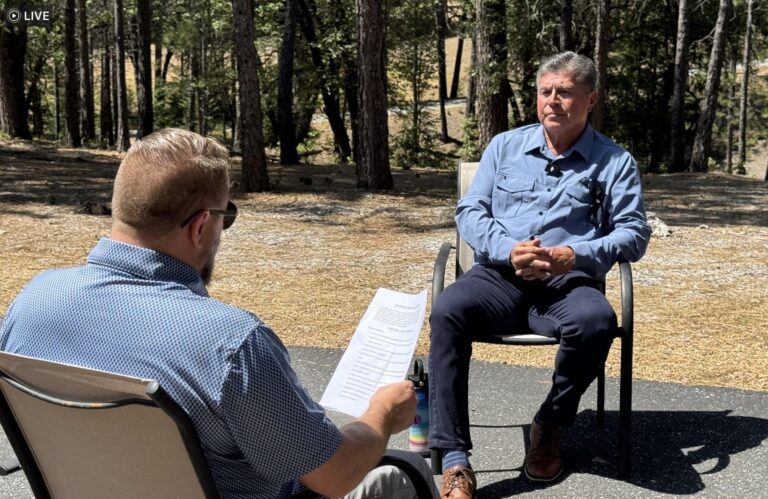
I was recently reminded of this while participating as a featured interviewee in Forgotten Schools: America’s Quiet Crisis, a documentary developed by educator, filmmaker, and storyteller Dr. Jeremy Brooks and his production team. The film examines the realities of rural education through the experiences of schools and communities in California’s Calaveras County and surrounding areas.
While the documentary focuses on one region, the issues it raises extend far beyond California. They are challenges familiar to rural school districts throughout the country.
Rural Education Requires Leadership That Understands Community
Rural school districts face many of the same responsibilities as larger systems, but often with very different circumstances. Recruiting and retaining exceptional teachers and administrators can be difficult. Access to specialized services, including special education, mental health support, and advanced academic opportunities, may be limited. Transportation costs, aging facilities, housing shortages, and constrained financial resources can place extraordinary pressure on already stretched school systems.
At the same time, rural districts remain responsible for providing students with meaningful opportunities to learn, grow, and succeed. The expectations for student success should never be diminished because of a school’s size or location. Neither should our commitment to providing the resources necessary to achieve that success.
This is where educational leadership matters.
Throughout my career in public education, including my years serving as a superintendent, I have learned that effective leadership is never a one-size-fits-all proposition. Leaders must understand the unique circumstances of their communities, recognize the strengths that already exist, and work collaboratively to overcome barriers.
That is particularly important in rural communities.
The strongest leaders understand that they are not simply leading a school system. They are leading within a community where schools are often gathering places, community anchors, and sources of pride and possibility.
Looking Beyond the Challenges
It is easy to focus on what rural schools lack. But doing so can overlook one of their greatest assets: the people who choose to serve them. Rural educators frequently understand the importance of being part of something larger than themselves. They know that relationships matter and that the success of a child often depends upon the collective commitment of an entire community.
They find creative ways to overcome obstacles, stretch limited resources, and provide meaningful opportunities for students. They demonstrate resilience every day. But we must be careful about how we talk about that resilience.
Celebrating the determination of rural educators should never become an excuse for allowing inequitable conditions to continue. Their ability to accomplish more with less should inspire admiration, but it should also prompt us to ask a more important question:
What can we do to ensure they don’t always have to?
Rural communities deserve leaders who can identify opportunities within challenges, build strong partnerships, develop creative solutions, and bring people together around a shared vision for their schools. They also deserve systems of support that recognize the realities of serving geographically isolated communities.
Leadership Must Be Grounded in the Community
One of the most important lessons rural education can offer educational leaders is the value of understanding the community before attempting to lead it. Effective leaders take the time to listen. They understand the history and culture of the communities they serve. They recognize existing strengths rather than arriving with assumptions about what needs to be fixed.
They build relationships with educators, families, students, board members, and community partners. They identify barriers, but they also identify possibilities. And they understand that sustainable progress is rarely achieved alone. For rural districts, this can mean strengthening partnerships, expanding access to specialized services, developing leadership capacity, and creating strategies that reflect the district’s unique circumstances rather than simply adapting approaches designed for larger systems.
The right leadership can help a community see not only the challenges in front of it, but also what is possible beyond them.
From Awareness to Action
Forgotten Schools: America’s Quiet Crisis premiered October 6, 2026, at Sacramento’s historic Crest Theatre. The documentary provides an opportunity to bring greater attention to the experiences of rural educators, students, and communities.
But awareness is only the beginning. Educational leaders, school boards, policymakers, and community organizations should be asking:
- How can we better understand the unique needs of rural districts?
- How can we strengthen partnerships and improve access to specialized services?
- How can we develop and retain talented educational leaders in rural communities?
- How can funding approaches better reflect the actual costs of providing educational opportunities in geographically isolated areas?
- How can we ensure rural educators, families, and students have a meaningful voice in decisions about the future of public education?
These are not simply policy questions. They are leadership questions. And they deserve thoughtful answers.
No School Should Be Forgotten
Every community has strengths worth recognizing. Every school has people working to create better opportunities for students. And every child deserves leaders who believe in what is possible. Rural education reminds us that leadership is not about having every resource at your disposal. It is about understanding your community, building trust, recognizing strengths, navigating challenges, and bringing people together around a common purpose.
No school should be forgotten. No community should be overlooked. And no child’s future should be limited by where they happen to live. The stories of rural educators and communities matter. Their resilience matters. Their leadership matters. And their futures matter.
Our responsibility is not simply to celebrate that resilience, but to support the leaders and communities working every day to ensure that every student has the opportunity to learn, grow, and thrive.
Dr. Rob Martinez is a retired California school superintendent, author, educational consultant, HYA Associate, and the Resiliency Guy. His work focuses on resilient leadership, positive organizational cultures, and expanding educational opportunities for all students. Interested in working with Dr. Martinez in your district? Contact hya@hyasearch.com.